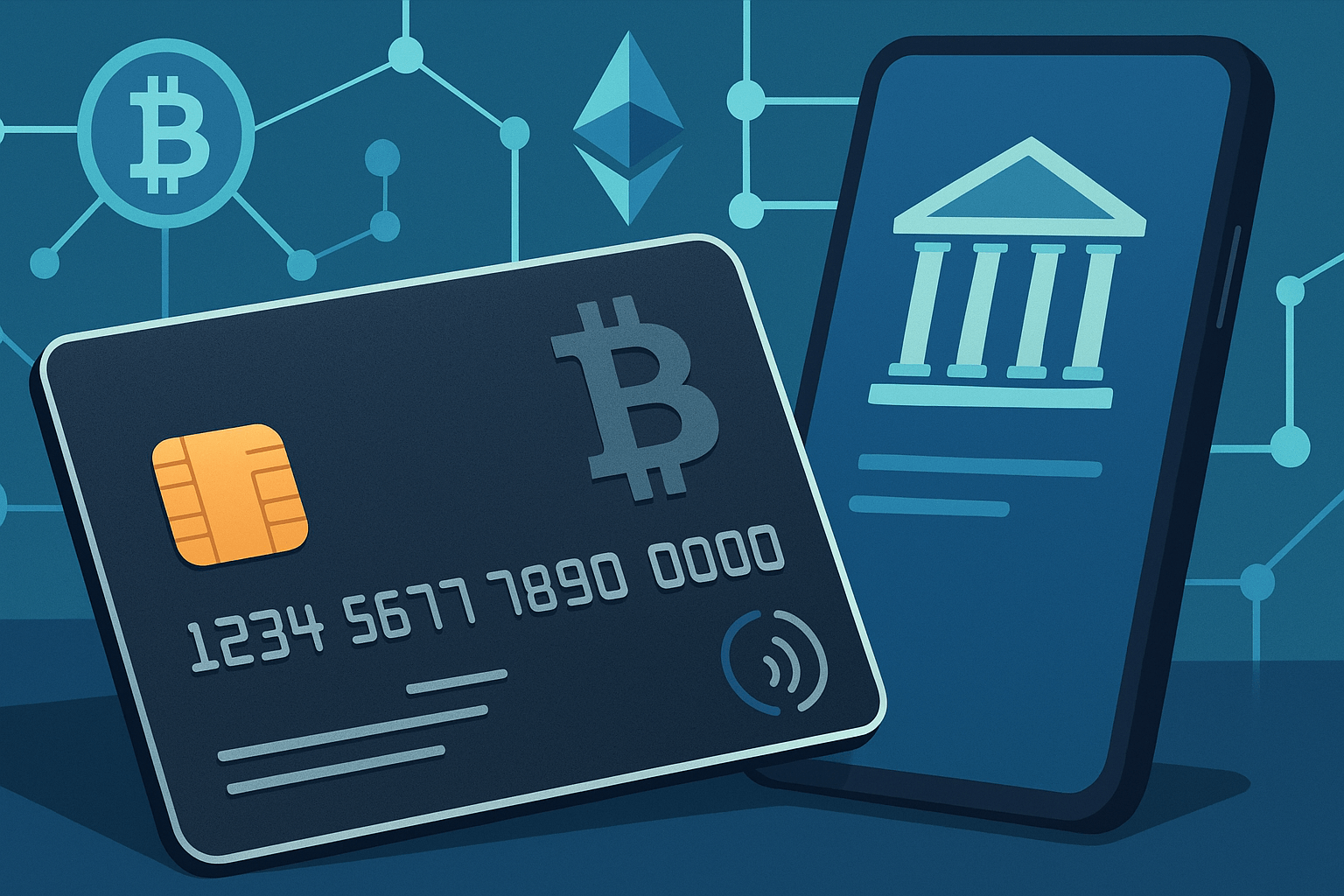
In 2025, cryptocurrency is no longer confined to exchanges or digital wallets. The growing use of crypto payment cards and their integration with traditional banking systems is bringing digital assets closer to everyday life. This shift marks a major step toward mainstream adoption, allowing people to spend, save, and manage crypto as easily as traditional money.
How Crypto Payment Cards Work
Crypto payment cards function much like regular debit or credit cards, but instead of drawing from a fiat account, they connect to a user’s digital wallet. When a purchase is made, the card provider instantly converts the chosen cryptocurrency into local currency at the point of sale. This makes it possible to use Bitcoin, Ethereum, or stablecoins for groceries, travel, and online shopping without merchants having to handle crypto directly.
The technology behind these cards has improved significantly. Instant conversions, minimal transaction fees, and broader acceptance networks are making them a practical option for both crypto enthusiasts and new users.
Banks and Fintechs Join the Movement
The line between traditional banking and crypto finance is becoming increasingly blurred. In 2025, many digital banks and fintech platforms have integrated crypto wallets into their systems, allowing users to hold both fiat and digital assets in a single account. Some even offer yield-earning opportunities through staking or decentralized finance partnerships.
Mainstream banks are also beginning to support limited crypto services. Customers can now buy, sell, or store popular coins directly from their banking apps, often through partnerships with licensed crypto providers. This collaboration bridges the gap between the established financial system and the decentralized world, offering convenience and security under regulatory oversight.
The Benefits for Consumers
The integration of crypto cards and banking systems offers several key benefits:
1. Convenience
Users can spend digital assets anywhere that accepts card payments, eliminating the need for separate wallets or manual conversions.
2. Speed and Cost Efficiency
Transactions are processed quickly and often at lower fees than international wire transfers or currency exchanges.
3. Accessibility
People in countries with limited banking infrastructure can use crypto payment cards as an alternative financial tool, giving them access to global commerce.
4. Rewards and Innovation
Some card programs now offer cashback in crypto or staking rewards instead of traditional loyalty points, adding another layer of incentive for adoption.
Addressing Volatility and Regulation
One of the main concerns with crypto payment systems has always been volatility. Stablecoins are solving this issue by providing a price-pegged medium of exchange. Many payment cards now allow users to hold stablecoins that track currencies like the US dollar or the euro, offering both flexibility and predictability.
On the regulatory front, clearer frameworks in regions such as the United States and the European Union have boosted confidence. Licensed providers are required to maintain full transparency and meet anti-money-laundering standards, ensuring safer transactions and stronger consumer protection.
The Future of Crypto Banking
As 2025 progresses, the partnership between banks, fintechs, and blockchain networks continues to deepen. In the near future, consumers may see fully integrated “hybrid accounts” where fiat and crypto coexist seamlessly. Businesses could accept digital payments without intermediaries, while payroll systems might pay salaries partially in crypto.
Crypto payment cards are an essential part of this evolution, acting as a bridge between the old and new financial worlds. They make digital assets practical for everyday spending while paving the way for broader blockchain-based financial innovation.
Final Thoughts
The rise of crypto payment cards and digital banking integration in 2025 shows that cryptocurrency is no longer just an investment, it is becoming a usable, accessible form of money. With increased regulation, smoother technology, and greater acceptance, crypto is stepping confidently into the global payments landscape. What was once experimental is now a natural extension of modern finance, bringing digital and traditional money closer than ever before.