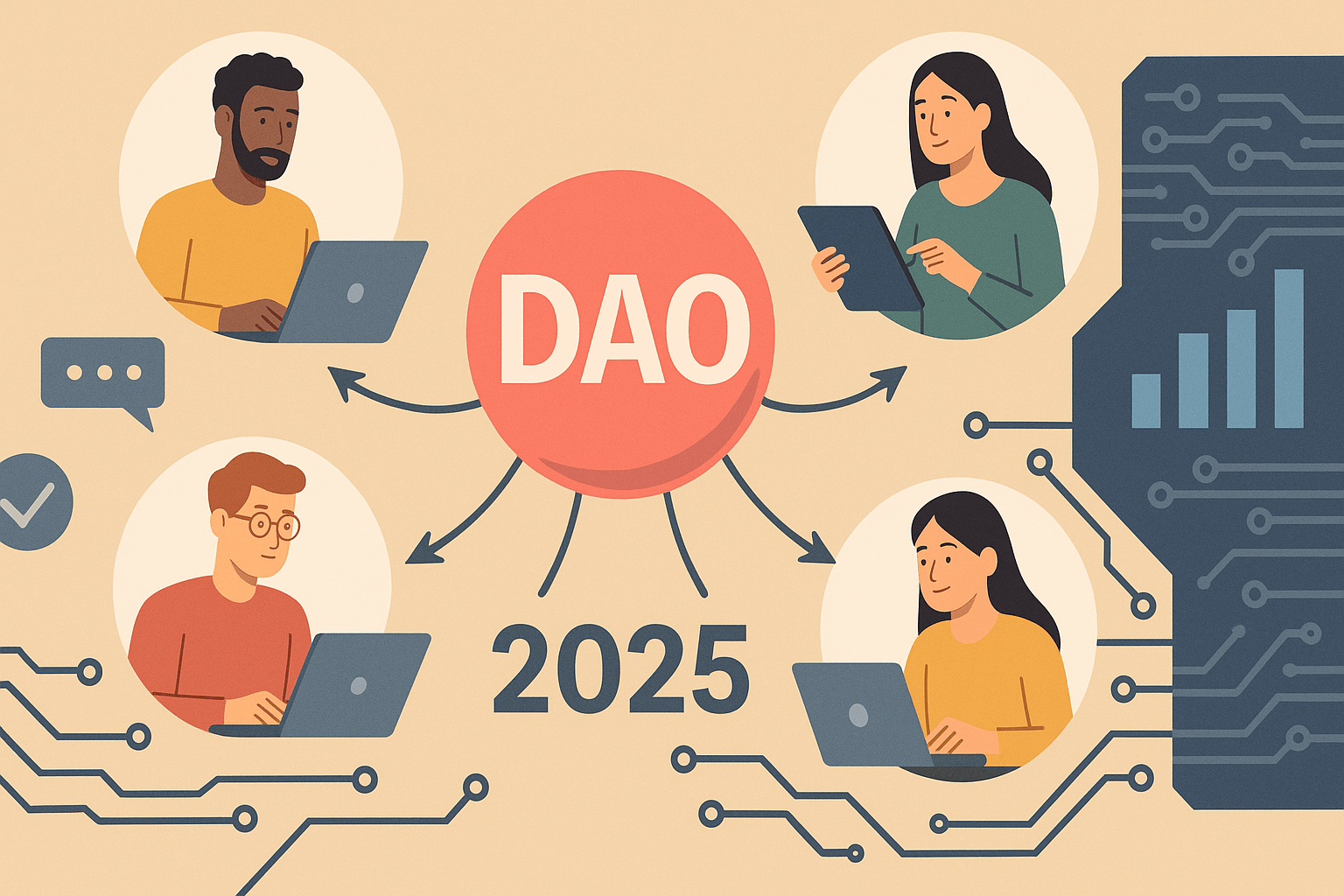
In 2025, decentralized autonomous organizations, or DAOs, have moved far beyond their early role as voting-based governance systems. Once seen mainly as tools for collective decision-making, DAOs are now evolving into dynamic ecosystems that manage investments, support communities, and fund real-world projects. This shift reflects how blockchain technology is maturing from theory into practical coordination models that span finance, culture, and innovation.
From Voting Groups to Living Organizations
The first generation of DAOs focused almost entirely on governance. Token holders voted on proposals to guide protocol upgrades, treasury spending, or community rules. While this structure worked for blockchain projects, it also revealed limitations. Participation rates were low, and many DAOs struggled to make decisions efficiently.
By 2025, developers have introduced smarter structures and automation tools that make DAOs more functional. Smart contracts handle routine operations, freeing members to focus on strategy rather than administration. Some DAOs now operate like digital cooperatives, blending human creativity with code-based efficiency.
DAOs as Investment and Funding Engines
One of the most significant trends is the rise of DAOs as investment vehicles. Rather than relying on traditional venture capital, many Web3 projects now turn to DAOs for funding. Members pool resources into a shared treasury, vote on proposals, and collectively manage the portfolio. This structure gives smaller investors access to opportunities that were once limited to private institutions.
Social and cultural DAOs are also expanding. Groups dedicated to art, gaming, and media production use shared funding to support creators and launch new initiatives. The model fosters collaboration and distributes profits transparently, building trust between contributors and communities.
Real-World Integration
2025 is the year DAOs are starting to bridge digital and physical worlds. Real estate investment DAOs, for example, allow token holders to co-own properties and share rental income through smart contracts. Environmental DAOs fund carbon offset projects and renewable energy initiatives, linking blockchain coordination to measurable real-world impact.
Regulatory clarity in regions such as Europe and Asia is also helping DAOs gain legitimacy. By adopting hybrid legal structures, some DAOs can now open bank accounts, sign contracts, and hire staff while maintaining decentralized ownership.
Smarter Tools and AI Integration
Artificial intelligence is playing a growing role in DAO management. AI systems assist with proposal analysis, risk assessment, and member engagement, making decision-making faster and more informed. Automation has reduced friction, allowing DAOs to function more like autonomous digital enterprises than voting clubs.
AI-driven analytics also help identify patterns in member behavior and resource allocation, improving transparency and efficiency. The combination of AI and blockchain is creating organizations that are both self-managing and adaptable.
Challenges Still Ahead
Despite progress, DAOs face ongoing challenges. Voter fatigue, unequal token distribution, and regulatory uncertainty continue to test their sustainability. Some communities are experimenting with reputation-based voting or quadratic systems to give smaller members more influence. Legal frameworks must also evolve to protect participants without undermining decentralization.
Security remains another key issue. As DAOs grow larger, treasury management and smart contract vulnerabilities require professional audits and risk oversight. The push toward hybrid models shows that balance between decentralization and accountability is still being refined.
Final Thoughts
In 2025, DAOs are transforming from experimental collectives into fully functioning digital organizations. Their evolution beyond governance represents a major milestone for decentralized coordination. With AI integration, legal recognition, and real-world applications, DAOs are becoming the infrastructure for community-owned economies. The coming years will determine how these organizations mature, but one thing is certain—they are redefining how humans collaborate, invest, and create value in the digital age.