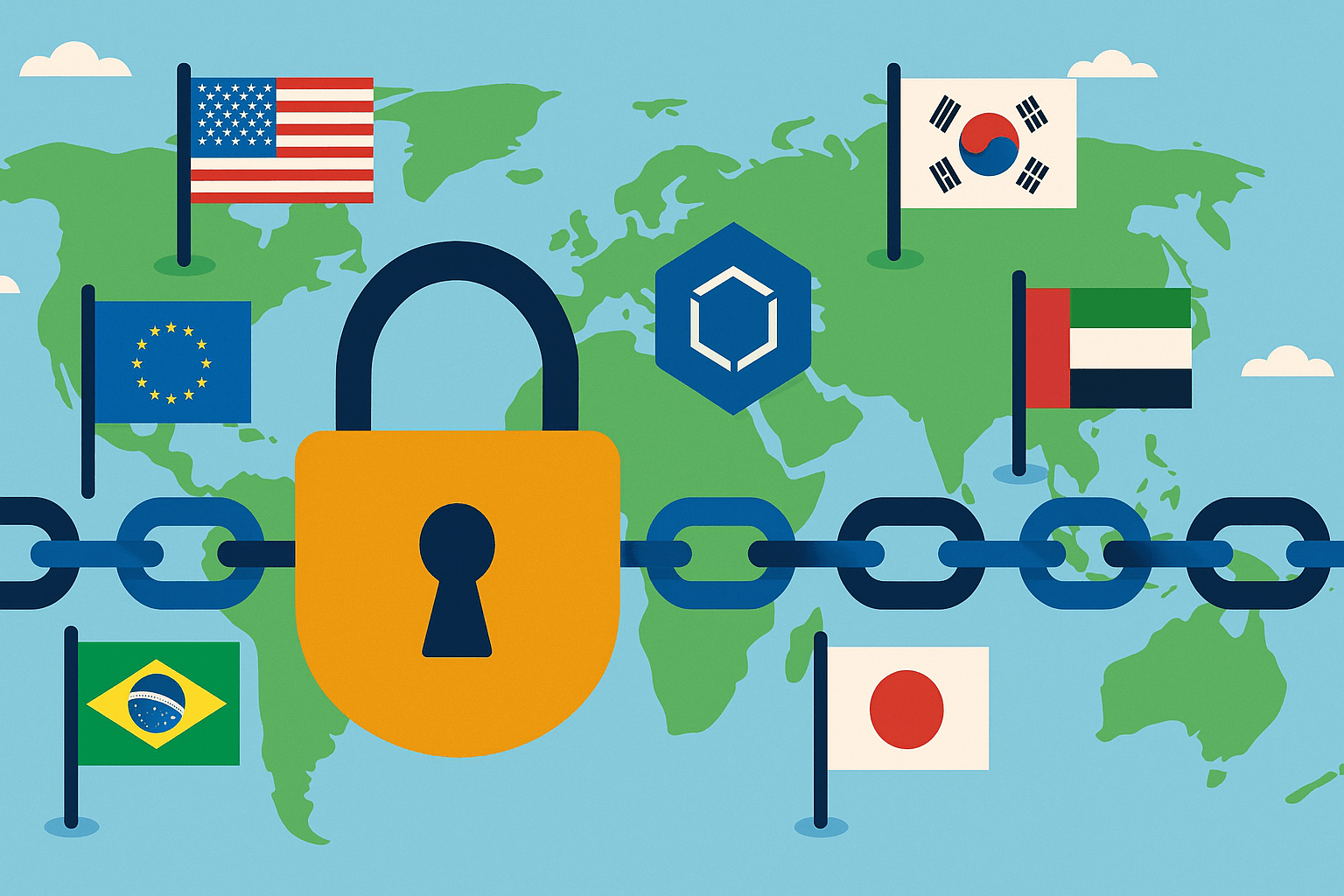
In 2025, the global regulatory landscape for blockchain technology is more active and diverse than ever before. Governments are recognizing that blockchain is not just about cryptocurrency speculation but about innovation, transparency, and efficiency in finance and beyond. While some nations are tightening restrictions, others are building frameworks that welcome blockchain as a cornerstone of their digital economies.
Asia: Innovation and Regulation in Balance
Asia remains at the center of blockchain growth. Countries such as Singapore, Japan, and South Korea are leading with clear legal frameworks that balance innovation with consumer protection.
Singapore continues to set the regional standard with a strong licensing system for blockchain-based businesses. The country encourages responsible innovation while maintaining strict compliance for anti-money laundering and data protection. Its approach attracts startups and institutional players seeking regulatory clarity.
Japan has integrated blockchain oversight into its financial system, with a focus on protecting consumers and ensuring operational transparency. Japanese regulators have supported stablecoin experimentation and tokenized assets, giving businesses the confidence to explore long-term use cases.
South Korea is another major player, investing in blockchain technology for government services, digital identity, and logistics. The country views blockchain as a key component of its national technology strategy rather than a fringe innovation.
Europe: Building a Unified Digital Framework
Europe has made major progress toward harmonizing blockchain rules across the region. The introduction of the Markets in Crypto-Assets Regulation (MiCA) provides a clear structure for digital asset operations, licensing, and investor protection. This unified framework is drawing investment into the European Union, where businesses now benefit from regulatory consistency across member states.
Germany and France have gone further by supporting tokenized securities and decentralized finance experiments within their financial sectors. Meanwhile, smaller countries such as Switzerland and Estonia continue to innovate, offering favorable conditions for blockchain startups and integrating distributed ledger technology into government systems.
North America: Regulation Through Clarity and Oversight
In the United States, 2025 marks a shift from uncertainty to clearer direction. The federal government has issued updated guidance for digital asset taxation, stablecoin regulation, and blockchain-based payment systems. While the rules remain strict, they now provide a framework that financial institutions can work within.
Canada has taken a more proactive approach, funding blockchain research and using pilot programs for public records and energy trading. By supporting both public and private blockchain development, Canada aims to balance innovation with trust and accountability.
The Middle East: Strategic Investment and Digital Vision
Countries in the Middle East are emerging as global blockchain leaders through strategic government initiatives.
The United Arab Emirates continues to advance its national blockchain strategy, integrating the technology into logistics, healthcare, and identity management. Dubai’s government aims to run most of its services on blockchain platforms, setting an example for digital transformation.
Saudi Arabia is also investing heavily in blockchain infrastructure through its Vision 2030 program. The country is exploring tokenized assets, cross-border trade platforms, and blockchain-enabled public services as part of its diversification efforts.
Latin America and Africa: Grassroots and Policy Growth
In Latin America, countries like Brazil and Argentina are using blockchain for financial inclusion and transparency in public services. Brazil’s central bank is exploring blockchain for its payment system, while startups in Argentina are using decentralized networks to fight inflation and corruption.
Across Africa, blockchain adoption is growing through necessity. Nigeria, Kenya, and South Africa are using blockchain for remittances, land registration, and identity verification. Governments are gradually creating policies to support this growth while maintaining oversight on digital asset trading.
Final Thoughts
In 2025, the countries leading in blockchain adoption share one trait: they see regulation as an enabler rather than an obstacle. Clear frameworks, public-private cooperation, and long-term vision are helping these nations attract investment and talent.
Blockchain’s global rise is no longer driven only by the private sector. Governments are now shaping its future, using regulation not just to control but to empower. The countries that combine innovation with responsibility will set the standard for how blockchain integrates into everyday life and the global economy.