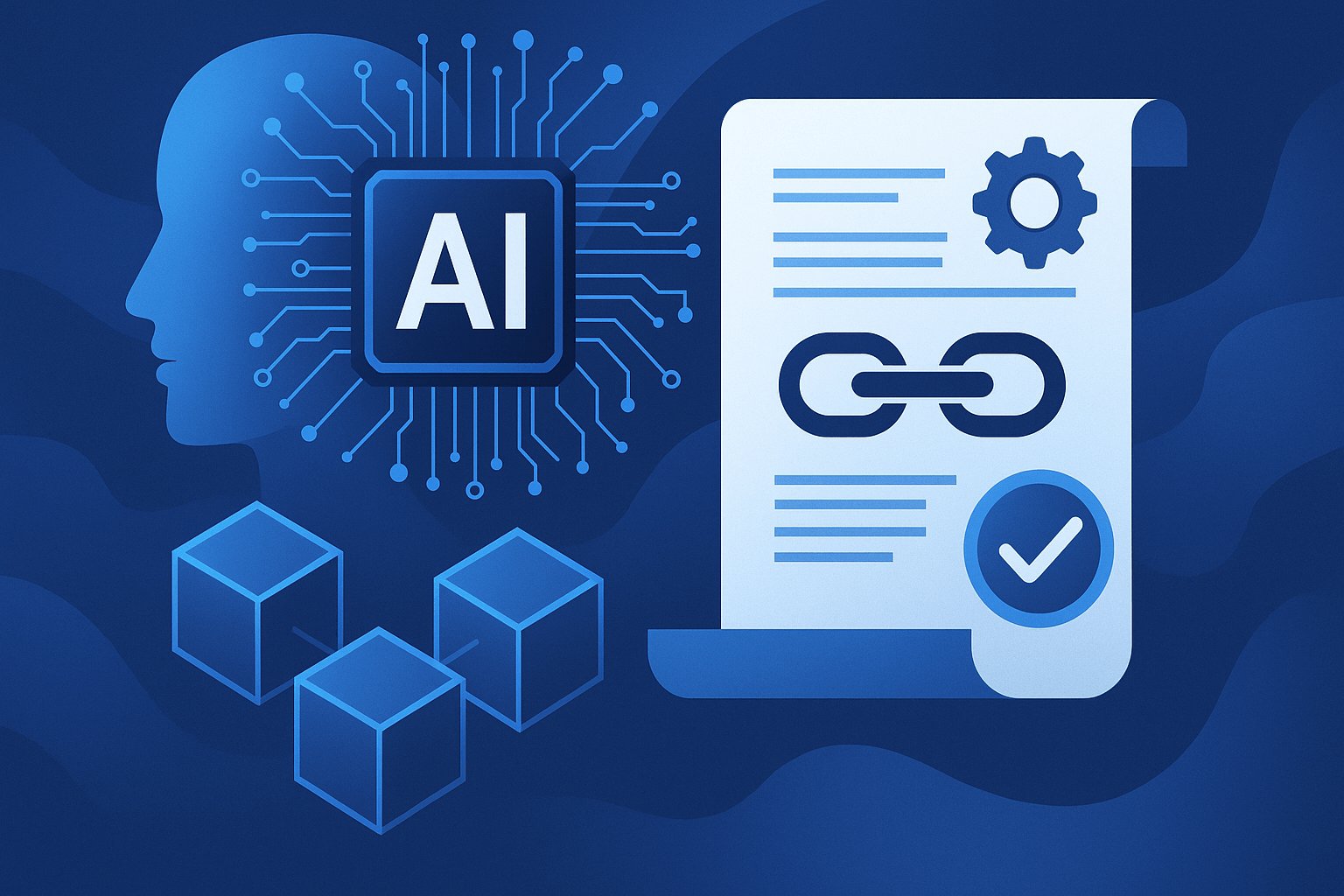
In 2025, the line between artificial intelligence and blockchain technology is blurring. Smart contracts, once seen as simple self-executing code, are evolving into intelligent systems capable of analyzing data, adapting to conditions, and making autonomous decisions. This new wave of AI-powered automation is changing how industries manage agreements, finance, and digital operations.
What Smart Contracts Have Been So Far
Traditional smart contracts execute actions automatically when specific conditions are met. They are written on blockchains such as Ethereum or Solana and are commonly used for decentralized finance, token swaps, and digital identity management.
Their strength lies in reliability and transparency. Once deployed, a smart contract performs exactly as programmed, without bias or interference. However, these contracts have long been limited by their inability to adapt or interpret complex real-world data. They follow static rules and cannot make nuanced decisions when conditions change.
How AI Is Making Smart Contracts Smarter
The integration of artificial intelligence is transforming these rigid scripts into dynamic systems. AI can interpret vast amounts of off-chain data, detect patterns, and make informed choices before triggering contract actions. This gives smart contracts greater flexibility and intelligence, enabling them to respond to real-world variables more effectively.
For example, instead of executing a loan liquidation purely based on price data, an AI-assisted contract can analyze market volatility, borrower history, and liquidity depth before acting. This leads to smarter, fairer decisions and reduces unnecessary losses.
AI also enhances the ability of smart contracts to detect fraud and risk. Machine learning models can monitor on-chain behavior in real time, flag suspicious transactions, and even adjust contract parameters automatically to prevent abuse.
Real-World Applications Emerging in 2025
1. Decentralized Finance (DeFi)
AI-powered smart contracts are improving automated market makers, lending protocols, and trading bots. These systems can rebalance liquidity pools, optimize interest rates, and reduce risk exposure without human intervention. The result is more stable and efficient decentralized finance operations.
2. Supply Chain Management
Blockchain-based supply chains now use AI to analyze logistics data and automatically execute payments or shipment releases. Smart contracts can verify authenticity, track delays, and adjust schedules based on predictive analytics. This reduces disputes and improves global trade transparency.
3. Insurance and Risk Management
Decentralized insurance protocols are adopting AI-driven contracts that assess weather data, medical information, or cybersecurity threats before triggering payouts. These contracts can evaluate risk more accurately than static formulas, helping create fairer and faster claim systems.
4. Real Estate and Asset Tokenization
Property transactions are becoming more automated. AI-integrated contracts can verify ownership, confirm regulatory compliance, and dynamically adjust lease or interest terms based on current market conditions. This reduces administrative work and ensures more accurate settlements.
Advantages of AI-Driven Smart Contracts
- Efficiency: Automation reduces human input and eliminates delays in verification and execution.
- Adaptability: Contracts can adjust terms and actions based on new data rather than fixed conditions.
- Security: AI tools enhance monitoring, helping detect exploits and fraudulent activities faster.
- Scalability: Complex industries can now use blockchain systems for tasks that once required manual oversight.
Challenges and Ethical Questions
With greater intelligence comes greater responsibility. AI-driven contracts must balance automation with accountability. If a contract makes an incorrect decision, determining liability can be difficult. There is also the risk of bias in AI models if data sets are incomplete or poorly trained.
Transparency remains essential. Developers must ensure that AI actions are verifiable on-chain and that users understand how automated decisions are made. The blend of AI and blockchain should preserve the openness that originally defined decentralized systems.
The Road Ahead
As both technologies mature, we are moving toward what some call “autonomous organizations in code.” These systems will not only enforce rules but also learn and evolve over time. Businesses may soon rely on intelligent contracts to manage supply chains, regulate markets, and execute global transactions with minimal human oversight.
Standardization and regulation will play key roles in shaping how these systems operate. Governments and developers must work together to ensure AI-powered automation enhances efficiency without compromising fairness or privacy.
Final Thoughts
Smart contracts are no longer just programmable rules. With the help of artificial intelligence, they are becoming adaptive, predictive, and capable of making informed decisions. In 2025, this evolution marks a new phase for blockchain technology, one where automation meets intelligence to create systems that are not only decentralized but truly self-sustaining.