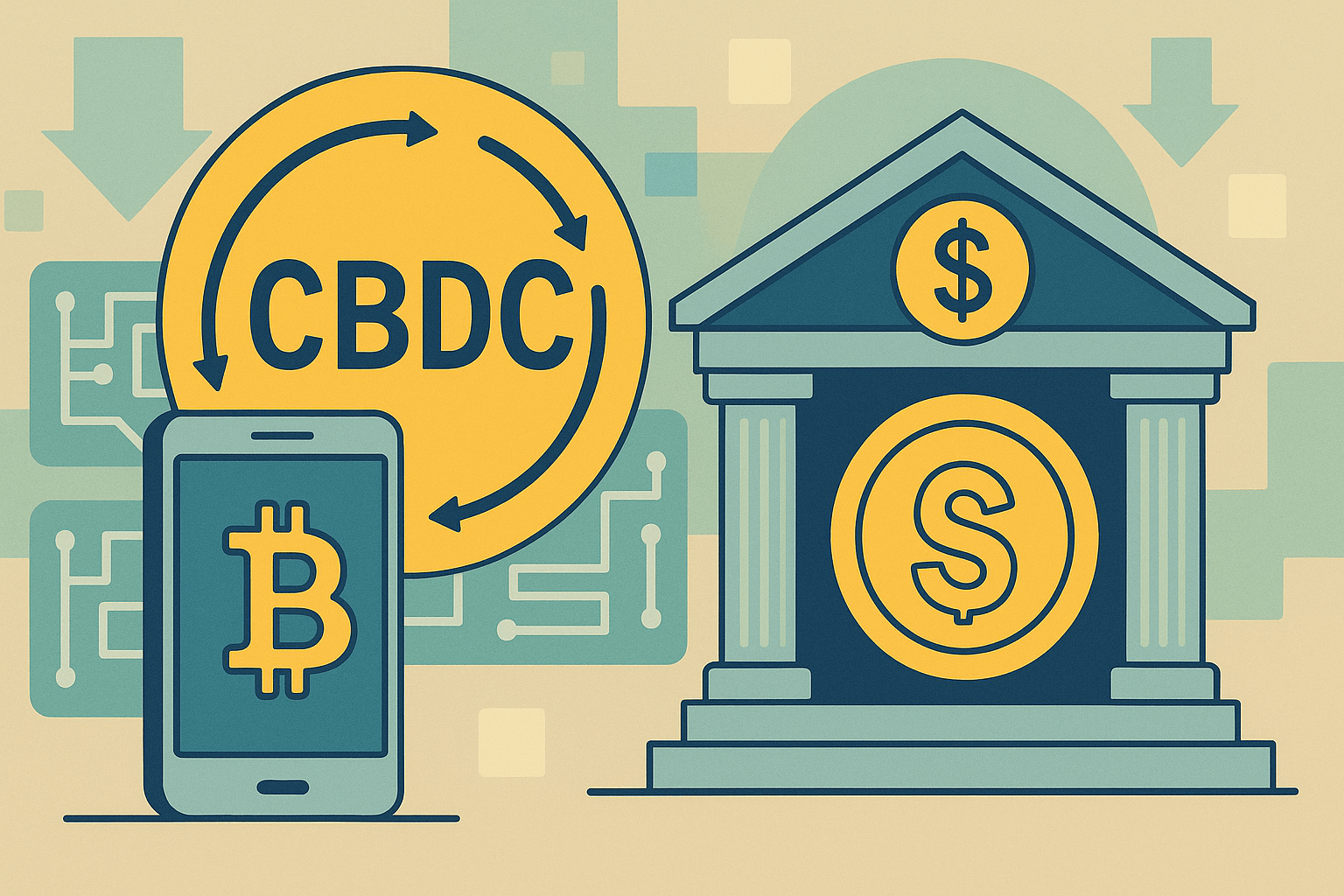
In 2025, the rise of government-backed digital currencies is reshaping the landscape of digital finance. Central Bank Digital Currencies, or CBDCs, have moved beyond pilot programs and into mainstream use across several major economies. Their growth is forcing a re-evaluation of private stablecoins, which once dominated digital payments and decentralized finance. The question now is whether stablecoins can coexist with CBDCs or if they risk being replaced by them.
What CBDCs Are and Why They Matter
A Central Bank Digital Currency is a digital version of a nation’s fiat currency, issued and controlled directly by its central bank. Unlike cryptocurrencies such as Bitcoin or decentralized stablecoins, CBDCs are fully regulated and backed by national reserves. They aim to provide the speed and efficiency of blockchain technology while maintaining the stability and trust of government-issued money.
Governments are launching these digital currencies to modernize payment systems, improve financial inclusion, and strengthen control over monetary policy. With growing adoption in countries like China, India, and members of the European Union, CBDCs are beginning to influence how digital money operates globally.
How Stablecoins Have Dominated Until Now
Stablecoins such as Tether and USD Coin were designed to solve one of crypto’s biggest problems: volatility. They allow traders and investors to move funds quickly between exchanges and decentralized applications without exposure to major price swings.
For years, stablecoins have served as the backbone of the digital asset economy, supporting decentralized finance, remittances, and cross-border payments. Their stability and accessibility made them an attractive alternative to traditional banking systems, especially in countries with weak currencies or limited financial infrastructure.
The Challenge from CBDCs
The arrival of CBDCs introduces a powerful competitor. Because they are issued by governments, CBDCs carry an inherent level of trust and legitimacy that private stablecoins often lack. Central banks can guarantee redemption, set transaction limits, and enforce compliance directly through the currency’s code.
This control gives CBDCs several advantages:
- Regulatory certainty: CBDCs operate within clear legal frameworks, while many stablecoins still face ongoing scrutiny.
- Lower risk of failure: Since they are backed by national reserves, users do not have to worry about whether issuers hold enough collateral.
- Direct integration: CBDCs can connect seamlessly with public services, tax systems, and banking infrastructure, making them more convenient for daily use.
Stablecoins Are Adapting
Despite the pressure, stablecoins are far from obsolete. Many issuers are evolving their models to remain competitive. Some are focusing on stronger transparency and audit practices to build trust with regulators. Others are exploring interoperability with CBDCs, allowing users to move funds easily between private and government-backed digital assets.
Decentralized stablecoins are also gaining renewed interest. These tokens, backed by over-collateralized crypto reserves rather than fiat, continue to appeal to users who value financial independence and censorship resistance. As CBDCs expand, these decentralized alternatives may attract those who prefer privacy and autonomy.
The Potential for Coexistence
Rather than replacing stablecoins, CBDCs could reshape their purpose. In the same way that commercial banks coexist with government money, private stablecoins may serve complementary roles. They could remain central to decentralized finance, cross-border transactions, and emerging market payments where CBDC access is limited.
Stablecoins can also innovate faster than government systems. By experimenting with new financial products, on-chain lending, and programmable payments, they can explore use cases that central banks may be too cautious to pursue. This flexibility could help them maintain relevance even as CBDCs gain dominance.
The Global Ripple Effect
The spread of CBDCs is influencing how countries regulate all forms of digital currency. Governments are introducing new frameworks for transparency, data privacy, and reserve management that apply equally to private issuers. This growing alignment between public and private digital money could lead to a more stable and interconnected ecosystem overall.
For developing nations, CBDCs and stablecoins together are expanding financial inclusion. People who were once excluded from formal banking can now access digital wallets, transfer funds instantly, and hold value securely. The key difference lies in who provides that service, a government institution or a private company.
Final Thoughts
In 2025, government-backed digital currencies are not eliminating stablecoins, but they are changing the rules of the game. CBDCs bring trust, regulation, and efficiency, while stablecoins offer flexibility, innovation, and decentralization.
The competition between the two is driving progress on both sides. Stablecoins are becoming more transparent and secure, and CBDCs are learning from blockchain’s strengths in speed and accessibility. Together, they are shaping a future where digital money is more inclusive, efficient, and adaptable than ever before.