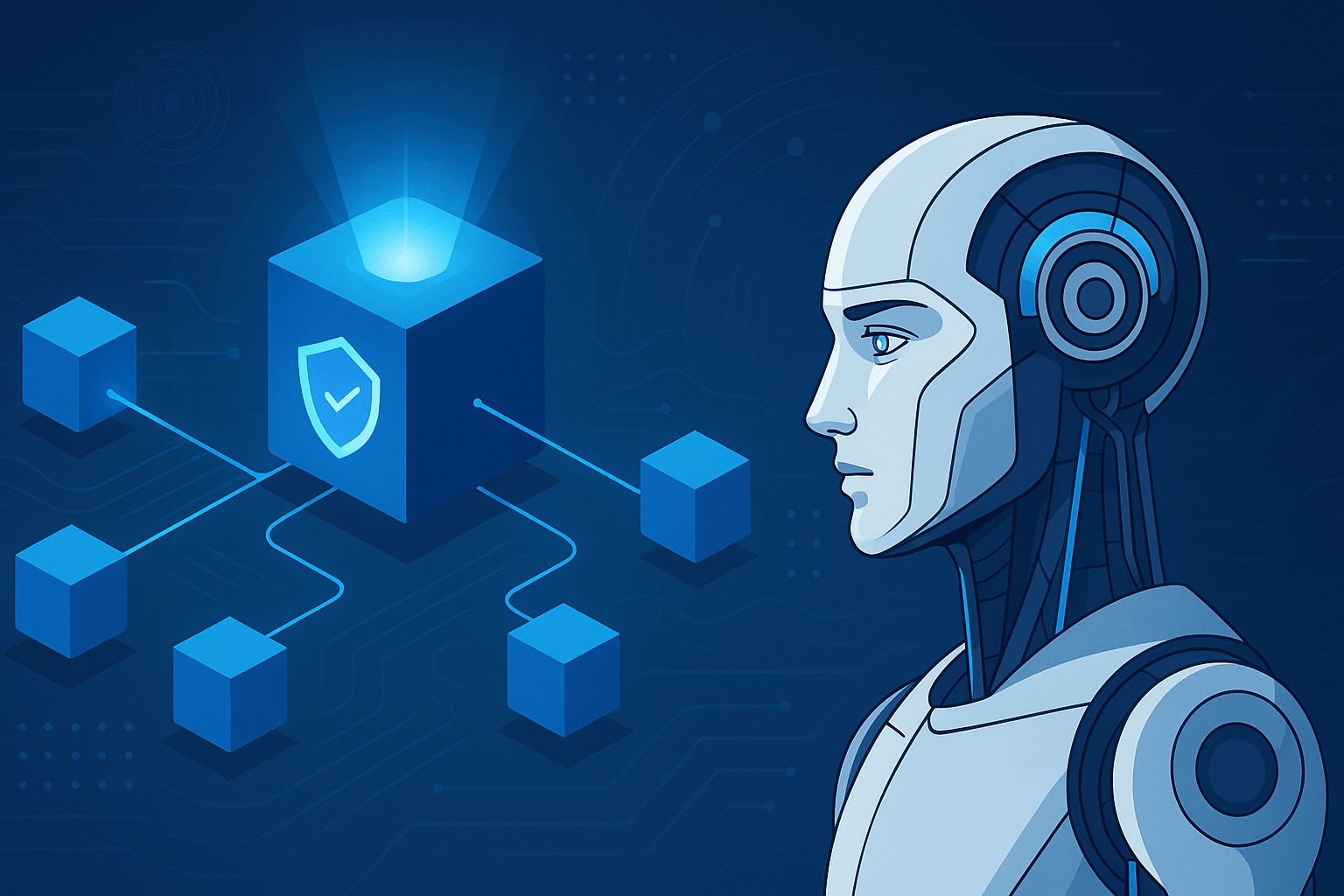
As blockchain technology continues to mature, one of its biggest challenges remains scalability. High transaction costs, network congestion, and long confirmation times have slowed the path toward mass adoption. In 2025, artificial intelligence is emerging as a powerful tool to solve these problems, bringing smarter optimization, automation, and prediction to blockchain systems.
Understanding Blockchain Scalability
Scalability refers to a blockchain’s ability to handle increasing transaction volumes efficiently. Popular networks such as Bitcoin and Ethereum have historically struggled during periods of high demand, leading to slower processing and higher fees. Developers have explored multiple solutions, including Layer 2 protocols, sidechains, and sharding, yet many of these still require careful management to balance speed, cost, and decentralization.
AI adds a new dimension by improving how these systems manage data and network activity in real time. Instead of reacting to congestion, AI can anticipate it and adjust accordingly, creating smoother and more reliable performance across the blockchain ecosystem.
AI’s Role in Network Optimization
In 2025, blockchain developers are using AI to enhance several layers of performance. Machine learning algorithms can predict transaction bottlenecks and reroute activity to less congested nodes. This predictive approach helps stabilize transaction speeds, even during spikes in demand.
AI is also improving block validation and consensus efficiency. By analyzing patterns of network behavior, algorithms can optimize resource allocation among validators, ensuring that energy and computing power are used more effectively. This leads to faster block creation and reduced waste, a crucial step for sustainable blockchain operations.
Smarter Data Management
As blockchains grow, so does the data stored within them. AI is being used to compress, categorize, and retrieve blockchain data more efficiently. Intelligent indexing systems allow nodes to process information faster without compromising decentralization. These tools make it easier for users and developers to access historical data, which supports analytics, audits, and regulatory compliance.
Enhancing Security and Stability
AI plays a vital role in detecting anomalies across blockchain networks. By continuously monitoring transactions, machine learning models can identify suspicious patterns that might signal an attack or system malfunction. This early detection allows networks to respond instantly, protecting users and maintaining confidence in decentralized systems.
Predictive maintenance is another growing area. AI can forecast when nodes or validators may fail, allowing proactive repairs or redistributions of workload. This self-correcting approach improves network uptime and reliability, two essential qualities for mainstream blockchain applications.
Integrating AI with Layer 2 and Cross-Chain Solutions
Layer 2 networks, which handle transactions off the main blockchain before settling them on-chain, benefit greatly from AI. Algorithms can optimize how and when transactions are bundled, maximizing throughput without overloading the network. Similarly, AI enhances cross-chain communication by monitoring bridge performance and minimizing latency between different ecosystems.
This integration of AI and blockchain technology is creating a foundation for true scalability, where multiple networks can interact seamlessly without sacrificing speed or security.
Final Thoughts
In 2025, AI is becoming a cornerstone of blockchain scalability. Its ability to predict demand, manage resources, and enhance data flow is transforming how blockchains operate. As projects continue to merge artificial intelligence with decentralized systems, the industry is moving closer to a world where blockchain can scale globally, efficient, secure, and ready for real-world adoption.