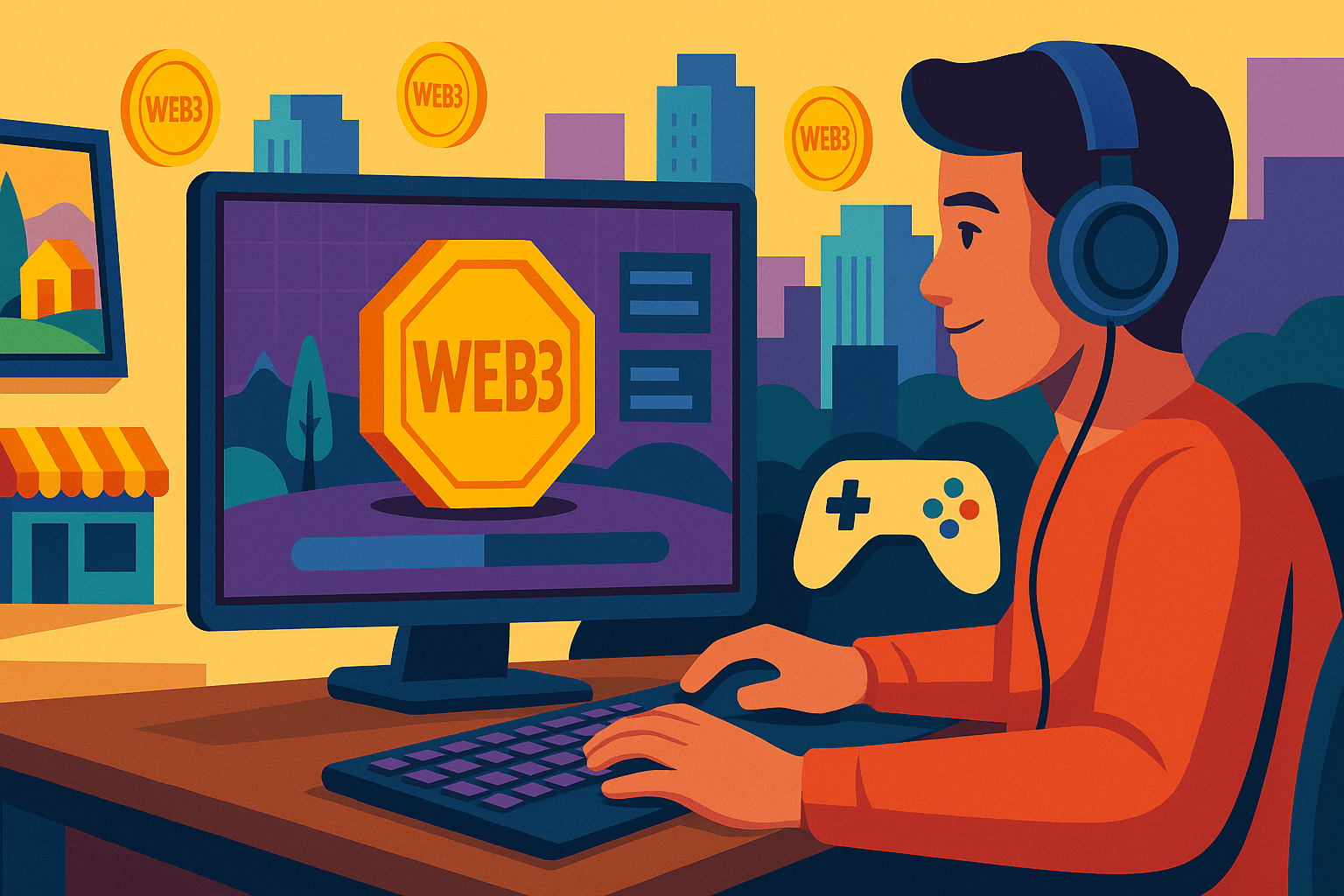
In 2025, Web3 gaming is emerging as one of the most dynamic frontiers of blockchain innovation. What began as a niche experiment in play-to-earn models has evolved into a full-scale transformation of how players, developers, and communities interact. The new generation of Web3 games is not just about earning tokens but about building sustainable, player-owned economies where digital value flows both ways.
From Play-to-Earn to Play-and-Own
Early blockchain games gained popularity by rewarding players with tokens for in-game activity. While that model introduced millions to crypto, it also created unsustainable inflation and short-lived engagement. In 2025, the focus has shifted toward play-and-own experiences, games where digital assets such as characters, weapons, and land have real utility and can be freely traded or used across multiple ecosystems.
These assets exist as NFTs on blockchain networks, giving players verifiable ownership. Unlike traditional games, where digital goods are locked behind company servers, Web3 titles let players buy, sell, or transfer their assets independently. This shift is creating a more participatory gaming culture that blurs the line between player and stakeholder.
The Rise of Interoperable Worlds
A defining trend in Web3 gaming is interoperability. Developers are building shared standards that allow assets from one game to function in another. For example, a sword or vehicle earned in one title could appear in a different world developed by another studio.
This innovation gives players lasting value for their time and investment while encouraging collaboration among game creators. Interoperability also expands the concept of the metaverse, transforming it from a collection of isolated virtual spaces into a connected digital economy.
Economic Ownership and Community Governance
Web3 gaming is not only changing asset ownership but also the structure of game economies. Many new projects are introducing governance tokens that allow players to influence development decisions. These tokens can represent voting rights, revenue sharing, or access to exclusive content.
This model mirrors decentralized finance in that users are both participants and stakeholders. Communities are forming around shared governance, where decisions on updates, balancing, or funding future content come directly from those who play the most. For developers, this means long-term engagement instead of short-term spikes in attention.
Sustainability Over Speculation
The biggest lesson learned from the first generation of blockchain games is that speculative economies do not last. In 2025, developers are building sustainable systems that emphasize balanced tokenomics, genuine gameplay enjoyment, and stable reward loops.
Tokens are increasingly being tied to real in-game achievements or ecosystem contributions rather than simply playing for payouts. This approach keeps value creation tied to effort and creativity instead of endless inflation. Many studios now employ professional economists to design systems that ensure long-term stability and player trust.
The Role of Layer 2 and Cross-Chain Infrastructure
Technical advancements are also driving the Web3 gaming revolution. Layer 2 networks and scalable blockchains are solving the biggest barriers that early projects faced—high fees and slow transaction speeds.
Fast, low-cost environments now make it practical to process thousands of microtransactions every second, from crafting items to player-to-player trades. Cross-chain solutions also allow games to operate on multiple networks, improving accessibility and liquidity for in-game assets.
These improvements mean that blockchain integration no longer disrupts gameplay. Instead, it works quietly in the background, enabling features like transparent economies, secure trading, and player-driven marketplaces.
Real-World Impacts and Emerging Opportunities
The new wave of Web3 games is attracting not only crypto enthusiasts but also mainstream gamers and developers. Major studios are experimenting with hybrid models that combine traditional gaming depth with blockchain functionality.
Players in emerging markets are also benefiting from the rise of digital asset ownership. For many, Web3 gaming offers access to income opportunities and creative expression that were previously limited by geography or infrastructure. Communities are forming around in-game economies where players earn, trade, and collaborate in ways that feel both fun and financially meaningful.
Challenges Ahead
Despite progress, Web3 gaming still faces hurdles. Regulatory uncertainty around NFTs and token-based rewards remains a concern. Developers must also balance transparency with compliance as governments establish clearer frameworks for digital assets.
User onboarding is another challenge. For widespread adoption, games must simplify wallet integration, asset management, and security. The goal is to make blockchain features feel as seamless as traditional online gaming.
Final Thoughts
Web3 gaming in 2025 represents the next stage of digital entertainment, where players are not just consumers but co-owners of the worlds they inhabit. The shift from centralized control to decentralized creativity is creating new opportunities for innovation and community building.
As technology continues to mature, the line between gaming, economics, and digital identity will blur even further. In this new era of player-owned economies, the games people play may soon shape not only virtual worlds but the future of work, trade, and culture itself.